Learn French Online in 2026: The Complete Guide to Becoming Fluent Faster

Learning French has never been more accessible. Whether you're preparing for the TEF Canada exam, relocating to Canada, advancing your career, traveling, or simply learning for personal growth, online French lessons have made it possible to reach fluency from anywhere in the world.
However, one problem remains.
Thousands of learners spend months using language apps, watching YouTube videos, or memorizing vocabulary lists—yet they still struggle to hold a simple conversation.
Why?
Because language learning isn't about collecting words. It's about building communication skills through structured guidance, consistent speaking practice, and personalized feedback.
In this guide, we'll explain how to learn French efficiently, common mistakes learners make, and how to choose the right online French program for your goals.
Why More People Are Learning French Than Ever
French is spoken by more than 320 million people across five continents and is one of the fastest-growing international languages.
People choose to learn French for many reasons:
Immigration to Canada
Career advancement
International business
University admissions
Travel
Personal development
Cultural appreciation
For many learners, especially those planning to move to Canada, French can also significantly improve immigration opportunities through TEF Canada or TCF Canada exam results.
Can You Really Learn French Online?
Absolutely.
In fact, modern online learning often produces better results than traditional classroom courses.
Why?
Because quality online lessons provide:
Flexible scheduling
One-on-one attention
Small interactive groups
Native-speaking tutors
Personalized lesson plans
More speaking time
Recorded materials
Learning from anywhere
Instead of spending hours commuting to a language center, students invest that time into actual practice.
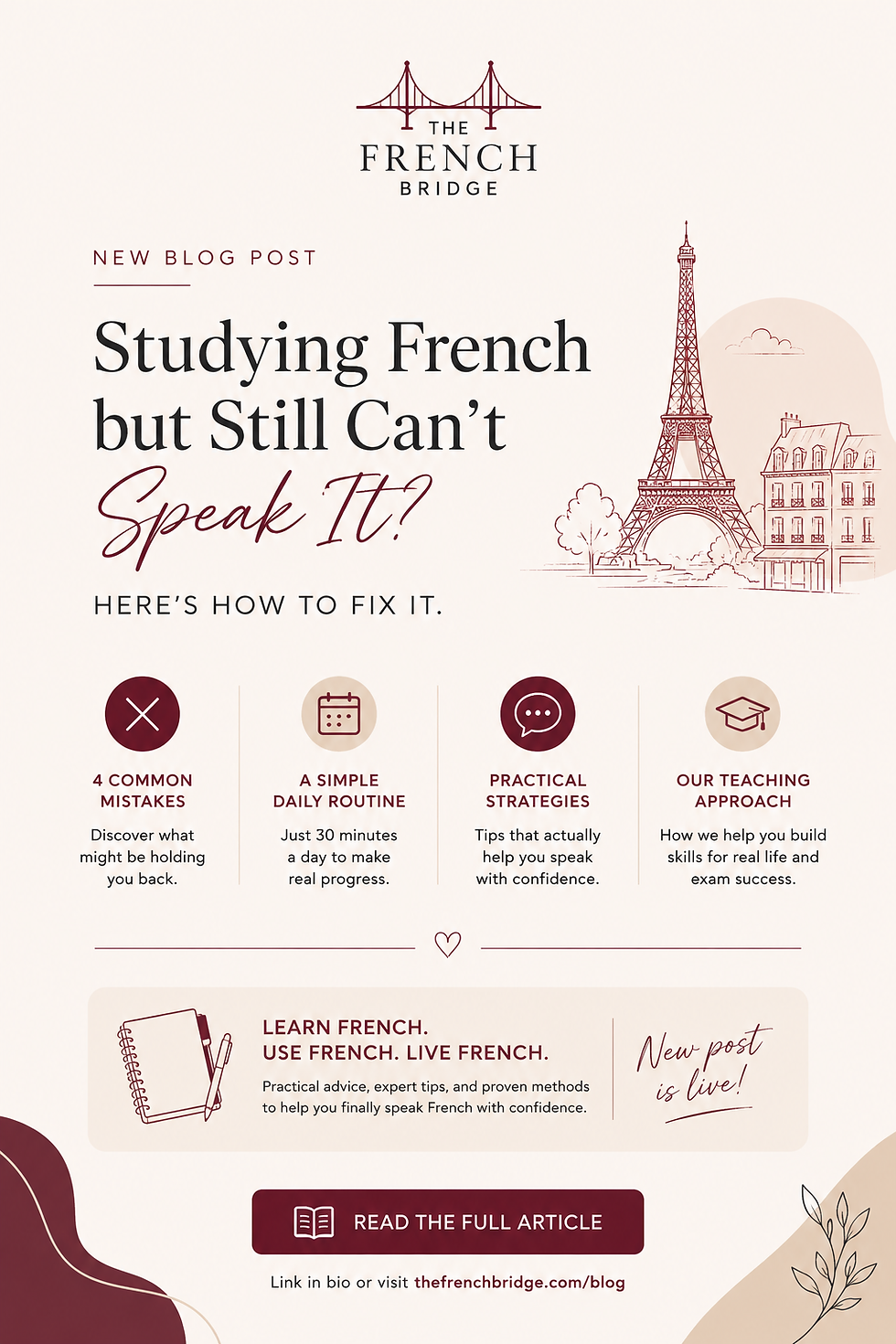
The Biggest Mistakes French Learners Make
1. Focusing Only on Apps
Language apps are useful for vocabulary.
They are not enough to develop real speaking confidence.
Many learners complete hundreds of app lessons but freeze during an actual conversation.
2. Avoiding Speaking
Speaking feels uncomfortable.
That's exactly why it needs to become a regular habit.
Making mistakes is one of the fastest ways to improve pronunciation, grammar, and fluency.
3. Memorizing Grammar Without Using It
Knowing grammar rules doesn't automatically mean you can communicate.
Every grammar lesson should immediately be followed by speaking exercises, listening practice, and real conversations.
4. Inconsistent Learning
Learning once every two weeks rarely produces meaningful progress.
Consistency beats intensity.
Even two focused lessons every week can produce remarkable improvements over time.
What Makes an Effective Online French Course?
Not all online programs are built the same.
A high-quality French course should include:
Structured Curriculum
Lessons should follow a logical progression rather than random topics.
Students need to gradually build:
Vocabulary
Grammar
Listening
Reading
Speaking
Writing
Pronunciation
Each skill supports the next.
Live Speaking Practice
Real conversations accelerate learning more than passive studying.
Students should spend time actively speaking during every lesson.
Homework and Review
Progress happens between lessons.
Homework reinforces vocabulary, grammar, and speaking patterns introduced during class.
Personalized Feedback
One of the greatest advantages of online tutoring is receiving immediate corrections.
Instead of repeating mistakes for months, learners improve continuously.
Flexible Scheduling
Busy professionals often struggle with rigid language schools.
Online learning allows students to fit French around work, university, or family commitments.
How Long Does It Take to Learn French?
The answer depends on:
Your starting level
Study consistency
Speaking practice
Exposure outside class
A typical learner studying 2–4 hours per week with regular homework can make substantial progress within several months.
Fluency isn't achieved overnight.
It is built lesson by lesson.
Learning French for Canada
Many students learn French to improve their Canadian immigration profile.
Preparing for TEF Canada or TCF Canada requires more than general French knowledge.
Candidates must master:
Speaking strategies
Writing formats
Listening techniques
Reading comprehension
Time management
Exam vocabulary
Working with tutors familiar with these exams can make preparation much more efficient.
French for Work
French isn't only useful for immigration.
Professionals increasingly need French for:
Customer service
Healthcare
Engineering
Finance
Hospitality
Sales
International business
Business French emphasizes practical communication rather than academic grammar.
Students practice:
Meetings
Emails
Phone conversations
Presentations
Workplace vocabulary
How to Stay Motivated While Learning French
Motivation naturally rises and falls.
Instead of relying on motivation, successful learners build habits.
Some helpful strategies include:
Reading simple French articles
Watching French YouTube videos
Listening to French podcasts
Following French creators on social media
Changing your phone language
Keeping a vocabulary notebook
Speaking every week
Small daily exposure compounds over time.
Why Personalized Lessons Make a Difference
Every learner has different goals.
Some need French for immigration.
Others need workplace communication.
Some simply want conversational confidence.
Personalized lessons adapt to your pace, strengths, and challenges instead of forcing everyone through the same curriculum.
That often leads to faster progress and greater confidence.
Why Students Choose The French Bridge
At The French Bridge, we believe language learning should be practical, supportive, and built around real communication.
Our programs focus on helping students develop confidence through structured lessons, consistent speaking practice, personalized feedback, and flexible scheduling.
Whether you're starting from complete beginner level or preparing for TEF Canada or TCF Canada, our tutors guide you step by step toward your goals.
We offer:
One-on-one French lessons
Small group classes
TEF Canada preparation
TCF Canada preparation
French for work
Conversational French
Flexible online scheduling
Experienced tutors
Personalized learning plans
Rather than memorizing endless grammar rules, you'll actively use French throughout your learning journey.
Final Thoughts
Learning French is one of the best investments you can make in your future.
Whether your goal is moving to Canada, advancing your career, passing a language exam, or simply speaking another language with confidence, the right learning approach matters.
Consistency, guided practice, and real conversations will always outperform passive studying.
Start today, stay consistent, and remember:
Every fluent French speaker once struggled to introduce themselves.
The difference is they kept going.
Ready to Start Learning French?
Explore our online French programs and discover how personalized lessons can help you reach your goals faster.
The French Bridge is here to support your journey—one conversation at a time.


Comments