Why "C'est" and "Il est" Confuse Almost Every French Learner (And How to Finally Get Them Right)

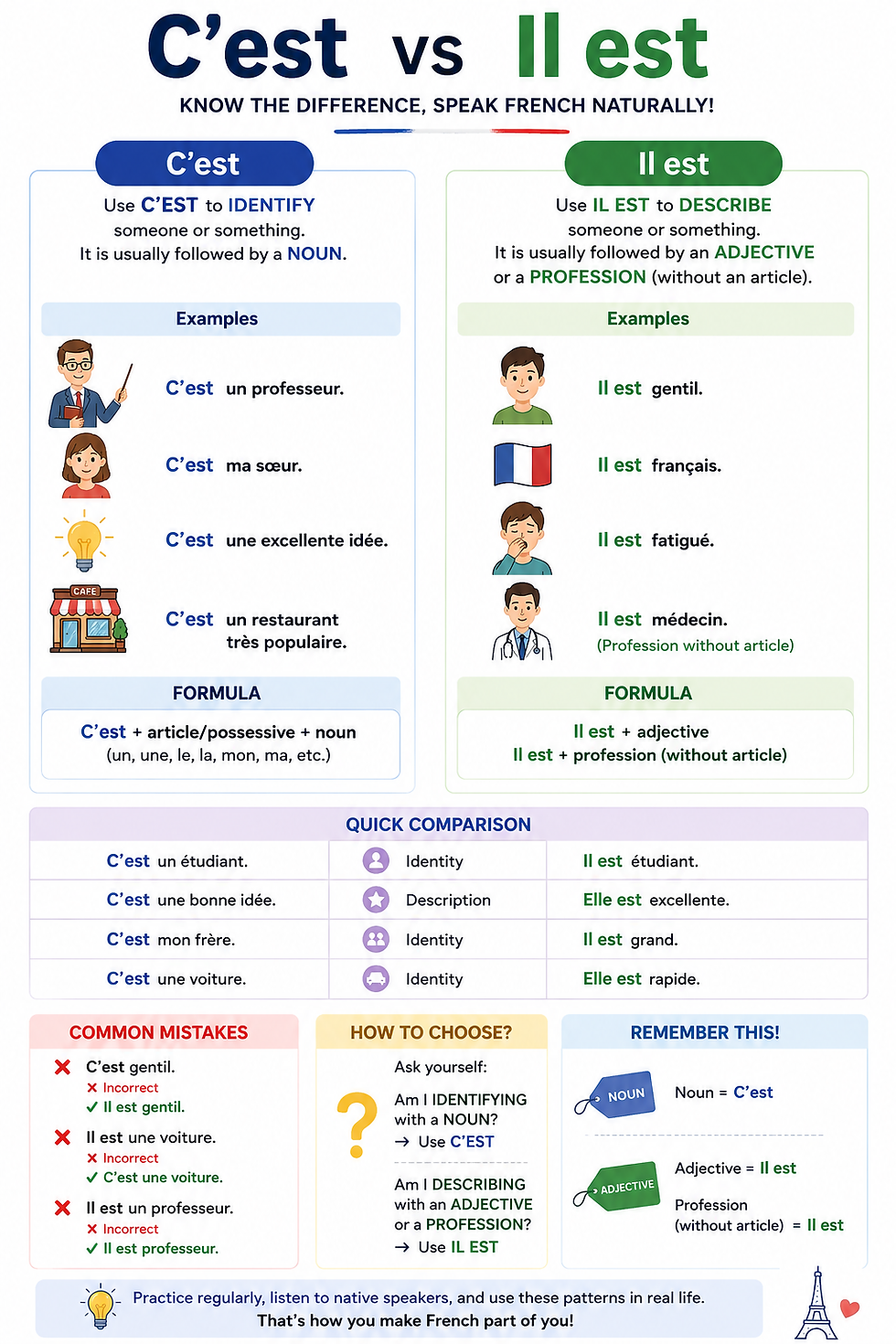
If you've ever written "Il est un professeur" or hesitated between "C'est français" and "Il est français," you're not alone.
The difference between c'est and il est is one of the most common stumbling blocks for French learners. Even students who have been studying for months sometimes mix them up.
The good news? Once you understand the logic behind these two expressions, you'll start using them naturally.
Why Is It So Confusing?
In English, we simply say "It is" or "He is." The same structure works in almost every situation.
French, however, makes a distinction based on what comes after the verb, not just who or what you're talking about.
That means choosing between c'est and il est isn't random—it's following a pattern.
Use C'est to Identify
Think of c'est as a way to identify or introduce someone or something.
You'll usually see it followed by a noun.
For example:
C'est un professeur.
C'est ma sœur.
C'est une excellente idée.
C'est un restaurant très populaire.
In each case, you're saying what something is, not describing it.
Use Il est to Describe
When you want to describe someone or something using an adjective, il est is usually the correct choice.
For example:
Il est gentil.
Il est fatigué.
Il est français.
Il est intelligent.
Here, you're talking about a characteristic rather than an identity.
The Exception That Catches Everyone
Professions are where many learners make mistakes.
In English, we say:
He is a doctor.
In French, the article disappears.
Instead of saying:
❌ Il est un médecin.
You should say:
✅ Il est médecin.
However, if you're describing the person with a noun phrase, the article comes back.
For example:
C'est un excellent médecin.
Understanding this small exception can make your French sound much more natural.
How to Remember the Difference
A simple trick is to ask yourself one question:
Am I identifying something or describing it?
If you're identifying it with a noun, c'est is usually the answer.
If you're describing it with an adjective or a profession (without an article), il est is usually the right choice.
Practice Makes It Automatic
Grammar rules are useful, but they only become natural through practice.
The next time you watch a French video, read a short article, or complete an exercise, pay attention to every c'est and il est you see. You'll quickly notice that native speakers follow these patterns consistently.
At The French Bridge, we teach grammar through real-life examples and conversation rather than isolated rules. Understanding why French works the way it does helps our students build confidence and speak more naturally from the very beginning.
The next time you're unsure whether to say c'est or il est, don't rely on guessing. Think about whether you're identifying or describing—and let the grammar do the rest.



Comments